The product
- Customer dashboard and admin panel
- Signup, login, roles and per-team permissions
- Data isolation between customers from day one
- Onboarding that gets users working without asking you for help

Your SaaS idea becomes a product you can actually sell
I build the whole product, from the first screen to recurring billing, with an architecture that holds up once customers start coming in.
A SaaS is not a website with a login. It is a product that charges on its own, keeps each customer’s data apart and does not fall over the day a hundred of them show up at once. This is what I build to get it there.
A product you can sell, not a demo that impresses
Most SaaS products that die do not die from lack of customers. They die because the product could not take the growth, or because charging was still manual work. I build for that moment, not for next week’s demo.
You charge from the first customer
Subscriptions, plans and invoices are in from the start. Not something bolted on later when it already hurts.
It holds up when people arrive
The architecture is decided with a hundred customers in mind, not the first one. Growing does not force a rewrite.
Each customer’s data, kept apart
Isolation between customers is designed up front. Adding it afterwards is one of the most expensive fixes there is.
The product is yours
Source code, infrastructure and accounts in your name. If one day we go separate ways, the SaaS keeps running.
Subscription products for businesses, built on top of a process someone is already doing by hand.
Vertical tools
Software for one specific industry, where generic products never quite fit.
Data dashboards
Products that pull information from several sources and turn it into decisions for the customer.
Marketplaces and platforms
Two sides that need to meet, with payments, commissions and reputation in between.
Customer portals
Turning a service you already provide into a product with its own access and a monthly fee.
Paid APIs
Selling your data or your process as an API, with keys, usage limits and pay-per-use billing.
Products with AI inside
Language model features built into the product, with cost control per customer.
We define the product
What it solves, who for, and what can be left out of the first version without breaking the pitch.
I design the architecture
How customers are kept apart, how billing works and which decisions have to be made now so you do not pay for them in a year.
I build in versions
Frequent deliveries you can try and show. First what lets you sell, then what makes it comfortable.
I launch and evolve it
Deployment, metrics and alerts in production. From there the product grows on what real users tell you.
Got a SaaS idea and no clue where to start?
Tell me about it









Testimonials
Founders and teams that trusted me with the platform their business runs on.
“They brought a beautiful but demanding design, full of animations, and Miguelo delivered it pixel-perfect and blazing fast. And exportable to HTML to take it to their Shopify. Impeccable work.”
 Alberto FuentesWeb developer · project partner
“We wanted to launch the academy fast and with a site that felt trustworthy. Miguelo left the landing WordPress-ready, blazing fast and pixel perfect, and designed everything to be easy to maintain.”
 Xavi RecioCEO
“We shipped on time despite the tight deadlines and launched to a great reception among our first students. And on top of that he left us something cheap to maintain.”
 Arnau RamióCOO
“Swap, chart, native token and the Solidity smart contracts on Shiden, all pixel perfect. It even survived a complete redesign with less time and stayed blazing fast.”
 Josep BoveCTO
Common questions
What people almost always ask me before starting a subscription product.
The business problem behind each one, what I built and the measured outcome.
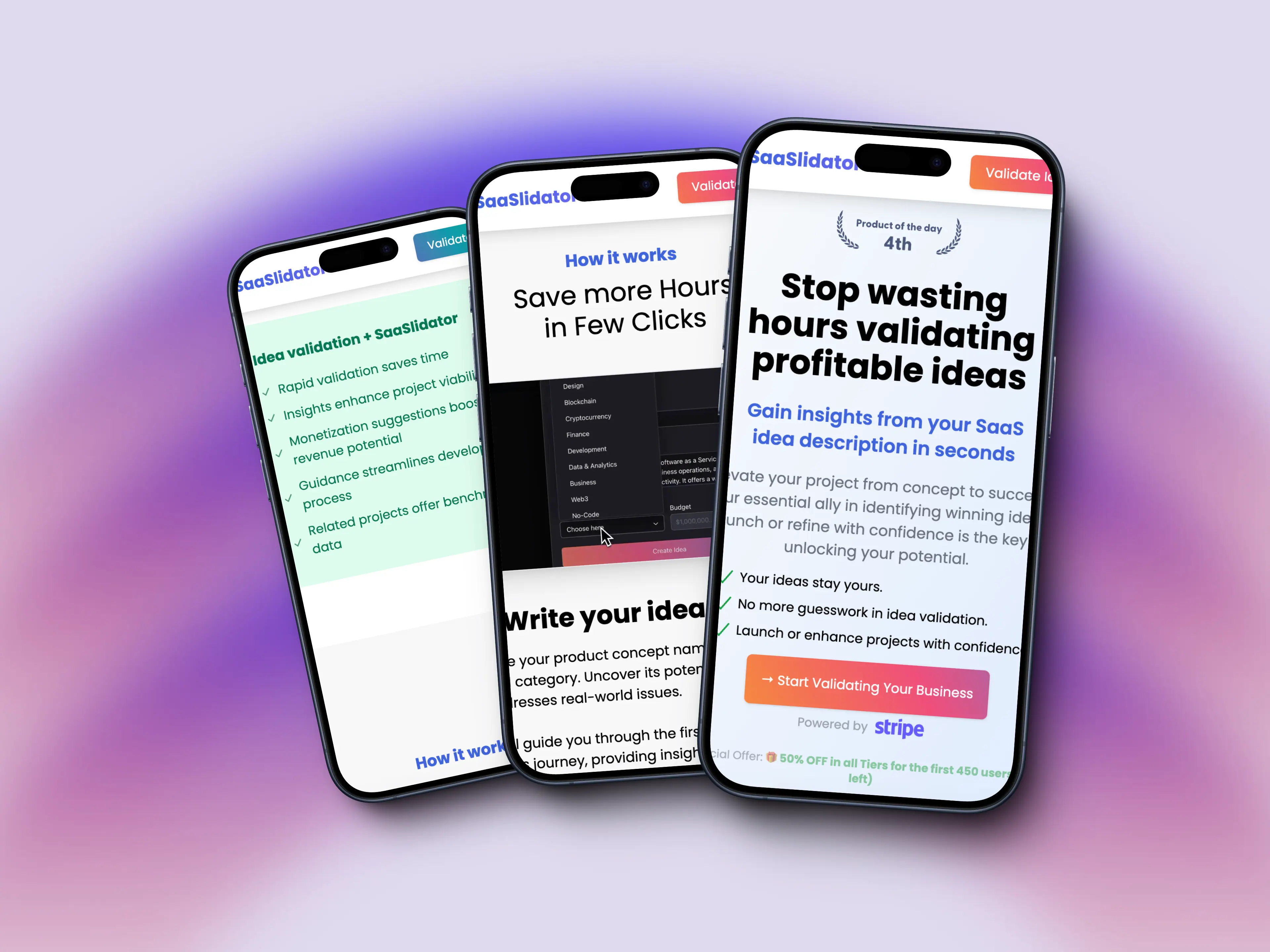 SaaS · AI
A SaaS that validates a business idea in minutes instead of hours and at a fraction of the cost, helping launch 30% more projects. It launched and did relatively well.
See the solution DeFi · Launchpad
Despite a full redesign against the clock, I delivered a blazing-fast site, with a 1.1s load, that was very well received and grew active users by 22%.
See the solution EdTech · Crypto
Despite the tight deadlines, CryptoMaster Academy shipped on time, with a 1-second LCP, and launched to a great reception: 24% more course sign-ups.
See the solutionGot a SaaS idea in mind? Let's talk!